The little red socks that could

May 8th, 2011

The aim for this year is to use up as much stash as possible. Not to avoid buying yarn per se, but to make stash the first port of call when starting a project. So far it’s worked fairly well; there was enough yarn in my meagre stash to make a vest, a cowl (with some help from an abandoned scarf) and a bolero (with some help from a knitterly stranger). These socks, however, have put an end the golden run of stash diving.

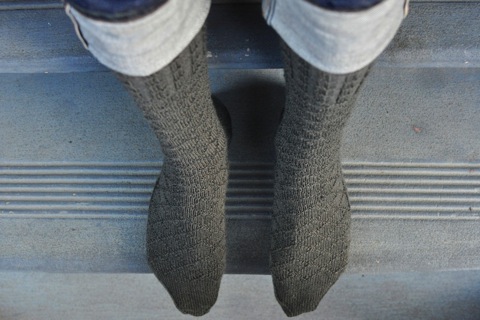
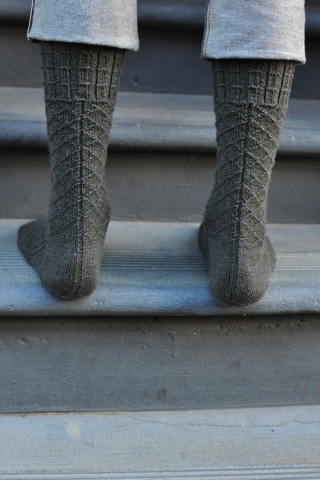
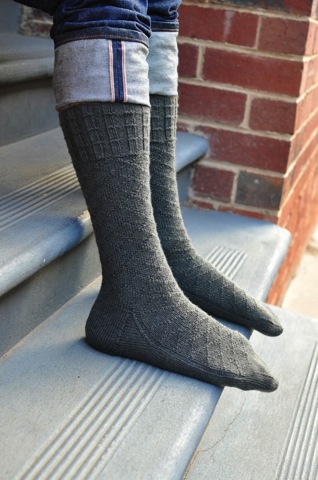
Kalajoki

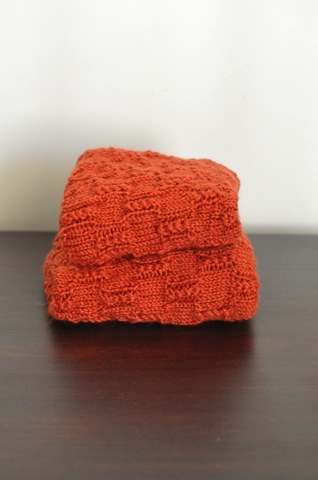
Initially there appeared to be more than enough yarn to make a pair of Kalajokis. In fact, there looked like there’d be enough to make a pair of knee high Kalajokis. As soon as the thought of red knee high socks materialised in my brain, it was over. It was a pair of red knee high Kalajokis or nothing.

There were four or five attempts to try and squeeze a pair of knee socks out of the yarn I had stashed, but it was to no avail. Even with a pair of knee socks that was close to vacuum sealed onto my legs, there wasn’t enough yarn for most of the foot. There’s definitely enough yarn for a pair of ‘normal’, shorter, Kalajokis, but quite frankly it feels dirty typing those words. Red knee high Kalajokis or nothing, remember?

Kalajoki plus ankle defence mechanism

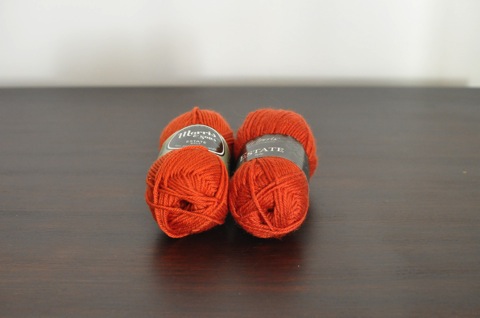
As it happens, the colour of the yarn (Bendigo Woollen Mills Allegro, in the discontinued colourway Scarlet) is pretty close to Patonyle 8ply in red. Let’s hope the seven balls purchased in the recent Clegs sale will be enough.

patonyle allegro face/off

As for the Allegro, its future is uncertain. It’s a fairly splitty yarn, so while the colour is good and the fabric seems pretty hard wearing, it’s not the best to knit with. So back it goes into the stash, waiting for another pattern to come along. Hopefully next time round there will be enough to finish whatever I start!

Timeliness is a virtue

May 1st, 2011

Let’s just say I’m extending Easter by posting about it one week late…

Normally Easter Sunday here consists of throwing a few Easter eggs around and calling it a hunt. Thanks to Not Martha’s timely post on papier-mache easter eggs, this year we took a different route.

It was a lot of effort for five minutes of destruction, but I think it was worth it for the smell of Clag alone. Who knew that the smell of a water and flour paste would bring back memories of Primary School? I feel it’s probably appropriate at this point to point out that I didn’t eat Clag as a kid, and I wasn’t even a little tempted to eat some while making the piñata.

Next time (and there will be a next time), I’ll probably use fewer layers of newspaper and use a slightly less ‘Toy Story ball‘ colour scheme. It’d also probably be a good idea to put in lollies and toys that were a bit lighter than the solid eggs we put in this one; in the end we needed to use four anchor points to hold the weight of the piñata. However, we were still able to give it a bash, break it open and get the contents, and that’s all that matters really.

Hope everyone’s Easter breaks were, or continue to be, nice and relaxing!

Lyttelton

April 21st, 2011

Lyttelton by Kate Davies
5.5 balls of Rowan Cotton Glace, Mystic
3.00mm and 3.25mm needles
Start: January 2011
Finish: March 2011
Modifications: heavier-weight yarn, larger needles, smaller size
Ravelryed: here

The yarn I used was a 5ply rather than the recommended 4ply, so I ended up making it extra small width-wise, and medium length-wise. There’s not actually an extra small listed in the pattern; I just made the smallest size, less one repeat.

As with the cowl, I was fairly staunchly anti-shrug, but there are shrugs and there are shrugs. Lyttelton’s probably a bit longer than your average shrug, so lets just say it’s more of a bolero. I had some fairly well documented teething problems with the pattern, but this was due to my ineptitude rather than the pattern. I’m sure I’ve mentioned this before, but once again just for my sake, it helps a lot if you read the pattern.

Once in the groove, I really enjoyed knitting it. One of the things that helped the enjoyment was cabling without a cable needle. If you haven’t tried it, I highly recommend taking a look at Grumperina’s tutorial. I think it saves time, and is a lot less fiddly.

Lyttelton is the first Kate Davies pattern I’ve made, and I’ll be definitely making other designs from her in the future. On a slight tangent, Kate’s latest cardigan pattern, Deco, is due for release in the next couple of days. Although I don’t have any suitable yarn for it in my stash, I’m really looking forward to its release. I’ll definitely be making one for myself.

Back to Lyttelton:

I bought this cotton when I was a uni student. I remember marvelling at it when it arrived in the mail, as it was probably the most expensive yarn I had bought up until that point. It was purchased specifically for the Lace Camisole, the cover pattern from Sarah Dallas’ Vintage Knits. However, before I cast on, I searched knitting blogs to find out how other knitters found the pattern (remember the days before Ravelry? yeah, it’s a bit hazy for me too). The reviews were not altogether positive, so the yarn languished in my stash. Lyttelton is probably better suited to a wool or a wool blend, but the grey cotton goes with a few things in my wardrobe, and I was keen to use the yarn up.

As it turns out, I didn’t quite have enough yarn for Lyttelton. As the colourway had been discontinued years ago, I put out a call on Ravelry for scraps (before Ravelry, how did people find just that last little bit of yarn they needed to finish? I don’t know either). Luckily, someone very generously helped me out, and I was able to finish it. It’s nice to see yarn that’s been in my stash for so long transformed into a finished item.

I should mention that much to my great annoyance, one of the balls I used had two knots in it. Usually I can handle the occasional knot, but two knots in just over 100 metres is quite frustrating. It was particularly frustrating because I knew I was running short so every centimetre of yarn counted, and I find weaving in ends of cotton yarn particularly tedious. As mentioned before, the colour was long discontinued so there was no point complaining to Rowan about it; I could whinge to myself and whinge to Matt, but ultimately I just had to put up with it.

So far I’ve only worn Lyttelton long enough to have photos taken. Currently it sits in my wardrobe, waiting for a warm enough day to be worn. Maybe that day will be soon?

Sunny

March 27th, 2011

Last post I promised sunny. The weather has been anything but, so I’ve had to make some sun instead.

Gaptastic Cowl by Jen Geigley (rav link)
200g Bendigo Woollen Mills Rustic 12 ply, Sunflower
8.00mm needles
Start: February 2011
Finish: March 2011
Modifications: Smaller needles, cast on more stitches, knit fewer rows
Ravelryed: here

This is such a straightforward pattern, but the result is very pleasing. The pattern suggests making it 15 inches in width, but I only made it 8.25 inches. I never wanted to make it 15 inches wide as it would just be too bulky for me, but as luck would have it, I ran out of yarn just after half way. As it is, I’m really happy with the width.

For a long time I was anti-cowl, but this pattern has made my steely resolve waver somewhat. I’m still not a huge fan of the smaller cowls, but there are a few longer cowls that I might consider making in the future.

The yarn started life as a diagonal lace scarf. However, it curled badly so I ended up with a kind of draught stopper/rope thing. It seems much happier to be a big seed stitch cowl. It’s possibly a little rough for use around my neck, but I got used to it pretty quickly.

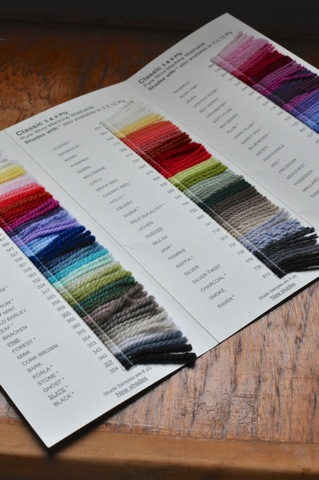
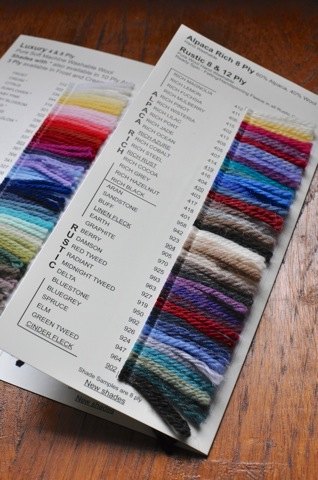
I’m starting to feel like the kiss of death for certain Bendigo Woollen Mills colourways. Sunflower and the light grey I used in my Golden Hands striped vest, were discontinued a few years ago. This run continued last week when this year’s shade card arrived — two lovely rusty red colours, Rust in Rustic and Tuscan in Classic, have also been discontinued. So, if there are any Bendigo Woollen Mills colourways that you’re not a fan of, let me know and I’ll start liking them. It’s a surefire way to get them discontinued.

As a postscript to my last post, I’ve decided to frog Pickadilly. The more I think about it, the more I’m convinced that they problem lies at the yoke. I’m determined to make it work, but it does mean reworking the pattern (again) to make it fit well. As DrK mentioned, top down raglans aren’t as easy as they appear on the surface, even though they’re often put forward as the ‘easy’ jumper pattern. While seeing a jumper or cardigan (slowly) appear before your eyes is very alluring, it doesn’t make it immune from fit issues. This pattern is a perfect example of that for me. Thank you everyone for you input, you all helped me take the in out of indecision.

Giving up is not really giving up

March 13th, 2011

At what point in a project do you decide to frog? Usually I have no qualms about frogging something and starting again if it’s not right. However, I’m currently in the midst of a project where I have a nagging feeling that perhaps I should completely frog, but I can’t quite bring myself to take the needles out and spend some quality time with my ball winder.

The pattern is Pickadilly. Since starting it in July last year, I’ve had issues the yoke, the waist shaping and the sleeves. It’s such a shame because I was so excited to start on this project, thinking that I’d found the perfect pattern to go with the Grignasco Tango I had in my stash.

I still think the cardigan looks great in the smokey blue tweed. After re-knitting the waist, I think I’ve got it pretty spot on for my body. However, I’m now onto the sleeves and thinking about frogging the lot and trying it again sometime in the future. A few people on Ravelry have mentioned that they have needed to modify the sleeves and I’m no exception. I’m now on my third attempt at the sleeves and even with heaps of decreases, there seems to be too much fabric around the underarms and the sleeves seem too baggy. To me that suggests that there’s issues at the yoke which means a lot of frogging, but it may also just be a side effect of knitting a raglan from the top down.

It pains me to think it might be best to cut my losses and frog the lot. It’s almost a point of pride that I’ll finish a project no matter how long it takes; Matt’s suave sweater is testament to that. But this feels different. As much as I like the idea of the cardigan, I’ve really struggled with sections of the pattern and I’m frustrated with it.

I really must apologise for the tone my posts have been taking of late. While I’m not a particularly cheery person in real life, I try not to be too negative here. Thank you for bearing with me while I vent my spleen a little, I promise you slightly sunnier posts are on their way!

Golden Hands striped vest

March 8th, 2011

It seems ridiculous that we’ve reached the third month of the year, and I’ve only just finished my first knitting project. If I’m being accurate, it was finished in late February, but that fact doesn’t seem to diminish the level of ridiculousness. Anyway, enough grizzling. Onward and upward!

Striped vest

Tailored waistcoat from Golden Hands Volume 1 (page 6)
About 180g Bendigo Woollen Mills Rustic 8ply, Graphite
About 100g Bendigo Woollen Mills Rustic 8ply, Flannel
4.00mm and 3.50mm needles
Start: November 2010
Finish: February 2011
Modifications: none that I can recall
Ravelryed: here

I’m mostly pleased with how the vest turned out. The curved front pieces are a really nice touch, as is the invisible cast on which was used on all the ribbing. Almost all the ribbing was knit as separate pieces and seamed, which was a necessary evil given the cast on. I did notice though that the ribbing did not hide sloppy seaming; I ended up having to redo the ribbing around the armholes because my sloppy finishing resulted in the ribbing bulging out. Once I stopped being lazy and started paying attention to what I was doing, the ribbing came out really nicely.

curved front

At the moment I’m hesitant to call the vest a success because of two pretty big things that I’m uneasy about. The first is the waist shaping: the shaping from hip to waist is pretty severe which makes that section jut out a bit. It’s possibly only noticeable only to me, but if I had my time again, I’d space the increases out a little more.
too short?

The second is the length: as I was knitting the back it looked like it was bordering on being too long, but when I tried it on, it was bordering on too short. I’ve given it a pretty severe blocking, but am not sure it’s helped much. Unfortunately I’ve run out of graphite, so it’s not possible to add in a couple more stripes. I’ll just have to learn to live with it.

Although I have a couple of reservations (none of which I might add are fatal flaws, but merely things to be wary of), it is a pretty straightforward pattern and it makes for a nice plain vest. If you are interested in this pattern and are located in Australia, it’s worth scouting around op shops as I often see copies of Golden Hands in the ones I frequent.

Now that I’ve finished something, it feels like my crafting year has finally commenced. It’s such a relief to know that I’ll have at least one finished project this year!

Desiccated coconut stashdown 2011

February 27th, 2011

Last week a momentous decision was made — it was time to run down my stash of desiccated coconut. My stash of desiccated coconut was first mentioned over a year ago, and despite my best efforts, it’s probably increased since then. Last week I made Coconut Pullapart Rolls from Not Quite Nigella. They turned out really well, and next time I’ll add some lime zest to the coconut filling.

Today I consulted my Women’s Weekly recipe cards and came up with this delightful cake.

Toasted Coconut Cake

Cake

0.5 cups desiccated coconut
125 grams butter
1 cup of brown sugar, lightly packed
1 tablespoon golden syrup
2 eggs
a pinch of salt
0.5 teaspoon vanilla
1.5 cups self-raising flour, sifted
0.5 cup milk

Icing

1 cup icing sugar
1.5 tablespoons lemon juice
2 tablespoons desiccated coconut, extra

Preheat oven to 180 degrees celsius, and grease and line a 20cm round cake tin

Toast all the coconut in a frypan over low heat, being careful not to burn. Set aside two tablespoons for the icing.
Cream butter and sugar together until light and fluffy. Beat in golden syrup.
Add in eggs one at a time, beating the first in thoroughly before adding the second.
Mix in the coconut, vanilla and salt. Add in the sifted flour gradually, alternating with the milk. Mix well.

Bake for 35-40 minutes. When cool, ice with lemon icing, sprinkling the rest of the toasted coconut on top.

For the icing, simply sift the icing sugar and add the lemon juice. Mix until it’s at a soft spreading consistency.

This cake is fantastic. The toasted coconut reminds me of the marshmallows from Darrel Lea, and the combination of brown sugar and golden syrup gives it a faintly caramel flavour. Although I followed the recipe this time round, it would work just as well (or better) with the fluffy lemon icing used on the ginger cake I made last year. It’s a pretty moist cake which surprised me. I imagined that the crumb would be drier, but the all-knowing toothpick came out clean so it was done based on that test. That said, it wouldn’t have hurt to bake it a little longer.

Now my desiccated coconut stash is much much lower than a fortnight ago, and hopefully I’ll be able to keep it at manageable levels. I really dislike wasting food, and unfortunately it’s really easy to do in my pantry with it’s deep shelves. Previously I have tried to keep track of my pantry contents via a spreadsheet, but there must be a better way. Does anyone have any recommendations for pantry inventory apps for Mac? If not, I may need to have a word with Matt…

Precious

February 19th, 2011

Christmas Day is now just a blip of a memory, but my Christmas was recently extended by the receipt of more presents (spoilt child that I am). One of those presents was very very precious, and I was, and still am, very lucky to receive it. My Mumma, the person who taught me to knit, gave me her button collection.

button box

For many crafty types, a grandmother’s button collection is a source of much joy and wonderment. This was no exception. Not only did I get a lot of lovely old buttons, but in some cases, she put sets of them in little bags and included stories of where the buttons came from.

panto buttons

‘These gold coloured buttons came from Aunt Nan in England. They were on a black silk jacket she had for a panto for the old ones. She was 88 then (lived to 99). Sent to be used for fancy dress, [my dad] had it on his Greek Evzone jacket. Won first prize.’

nana buttons

‘This is an old collection of my Mum (Granny), Nanna and some I collected over the years. I remember sitting on the mat in front of the fireplace at No.12 [her childhood home] and playing for hours with the button tin.’

I am very much my Mumma’s granddaughter in that we both knit, love op shopping and owls (my Mumma was all over ‘put a bird on it’ way before Portlandia). In our own ways we each love the past; I’m a sucker for nostalgia and she’s a mad keen genealogist. I haven’t really shown that much interest in my family’s history, but this button collection has completely knocked me over. Owning buttons from relatives that I know (Mumma), knew (Granny) and never met (Aunt Nan and Nanna) is really indescribable. They will be treasured.

The sum of parts

February 9th, 2011

In the last week I’ve politely asked the pattern reading fairy to leave, downloaded more podcasts and got on with the job of knitting and finishing. Thanks to DrK for alerting me to the fairy’s existence (made it much easier to get rid of her once I knew she existed!) and everyone’s podcast suggestions.

The sudden burst of motivation has resulted in the near completion of My Golden Hands vest. It’s probably really silly to feel like this, but I find this part of a knitting project really exciting. No longer does it look like a pile of related pieces, but an actual garment. Even seeing the parts come together neatly with mattress stitch is still slightly magical. Small things…

vest nearly done

It turns out that adding light grey stripes was a really good idea. I’ve had to unravel my swatch of dark grey Rustic for seaming, which means that I had pretty much just the right amount of dark grey for the vest.

The most difficult, or more accurately, annoying, part of the vest so far has been attaching the button band to the front pieces. Because it’s so long, I put it off as I thought it would be a tedious job. As is often the case though, once I started and got into a rhythm, it wasn’t too bad. At the moment it’s looking pretty good, bar slight lumpiness around the curved fronts. Let us hope a good wet block will sort that out.

When knitting attacks

January 24th, 2011

For a long time, podcasts and I didn’t get along. Concentrating for long periods of time does not come easily to me, so I felt podcasts were out of the question. I mentioned this to a couple of knitting friends late last year, and I’m sure they found it all a bit odd. Then Matt started listening to Radiolab. He played a couple of interesting episodes to me, so I thought I’d try them again.

The last time I looked for knitting podcasts, there were only one or two about. My, how things have changed! The number of podcasts about knitting now borders on overwhelming. Based on tidbits I’d heard when my friends discussed podcasts, I started listening to the Knitmore Girls. So far I’ve only listened to a couple of their podcasts, but I’ve found them all quite enjoyable. The mother/daughter presenters have a really good rapport, and their conversational style makes for easy listening. In writing all this, I’m sure I’m probably the last person to discover the Knitmore Girls and that this is old news to knitters everywhere.

The title of this post is a blatant ripoff of the Knitmore Girls’ segments, where they discuss issues they’ve had with their knitting. To be fair, in my case ‘when duffers attack’ is probably a more accurate title as the knitting is not at fault at all.

Soon after my last post, I ripped out my first attempt at Lyttelton and decided that it was probably too big anyway. ‘This is my silver lining’ I thought, and cast on again with one less pattern repeat. By the time I got to the sleeves yesterday morning, it was clear something was amiss again.

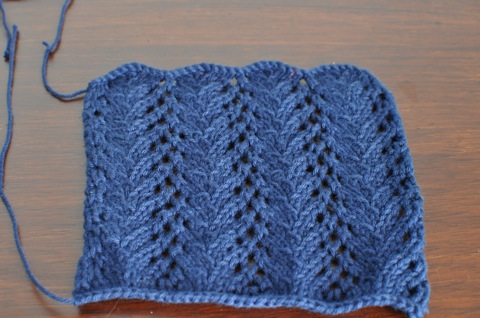
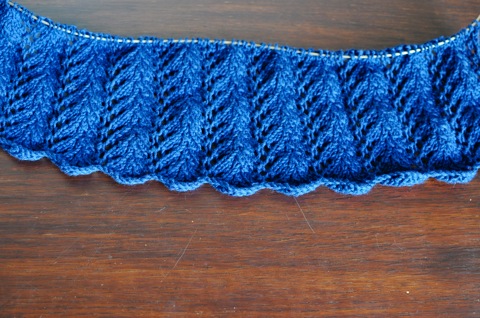
Comparing the shrug to the swatch, it appears I’m not starting each pattern repeat correctly. This means that the cable and trellis stitch was moving diagonally with each repeat, rather than straight up. Even though it was a fairly silly, simple mistake, it was subtle enough that it took me a little while to work out what I’d done wrong. It was also subtle enough that I can’t really capture it clearly on my camera. So yet again I shall frog, and hope that the mantra of ‘third time lucky’ holds.

punishment

As punishment, I’ll hold off from casting on again until I’ve finished the bands for my stripy vest. It’s a fairly trivial task (famous last words!), but each row is 433 stitches. Of 1×1 rib. I like to think of it as the knitting equivalent of writing out lines. That’ll teach me… hopefully.